



The confectionery industry relies on specialized machinery to produce high-quality sweets, chocolates, and candies efficiently. A well-planned confectionery equipment list is crucial for any operation, from small artisanal workshops to large-scale manufacturing plants. This guide outlines the core machinery, their functions, and how they integrate into the production workflow.
1. Core Processing Machinery
These machines form the heart of confectionery production, handling the primary stages of ingredient mixing, cooking, and forming.
1.1 Cooking and Heating Equipment
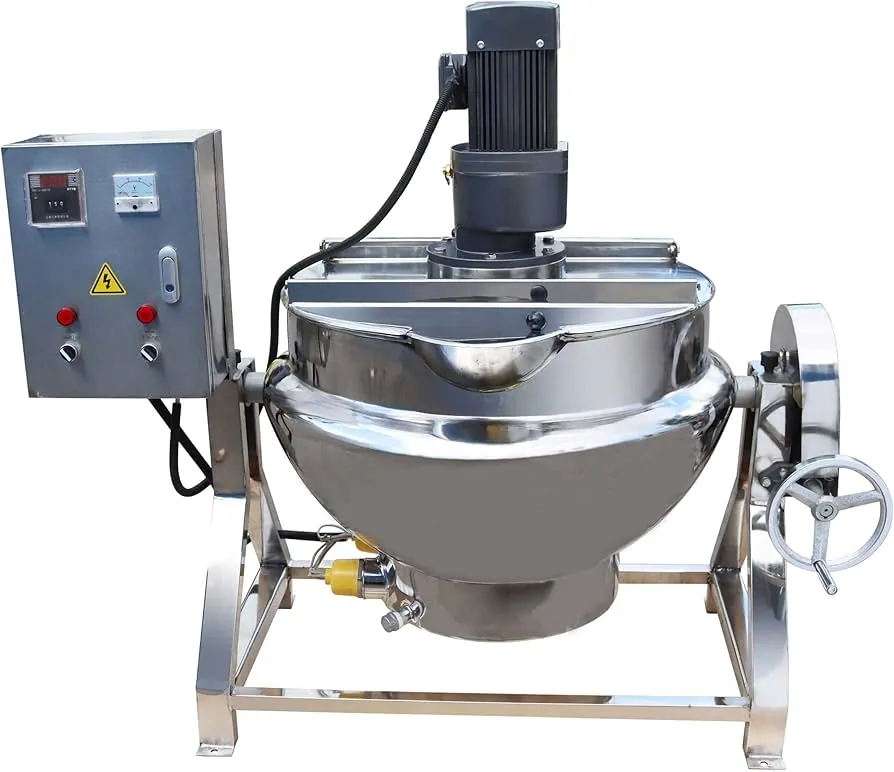
Precise temperature control is vital in confectionery. Gas or electric cooking kettles, continuous cookers, and vacuum cookers are used to boil sugar, glucose, and other ingredients to specific temperatures and concentrations.
1.2 Mixers and Blenders
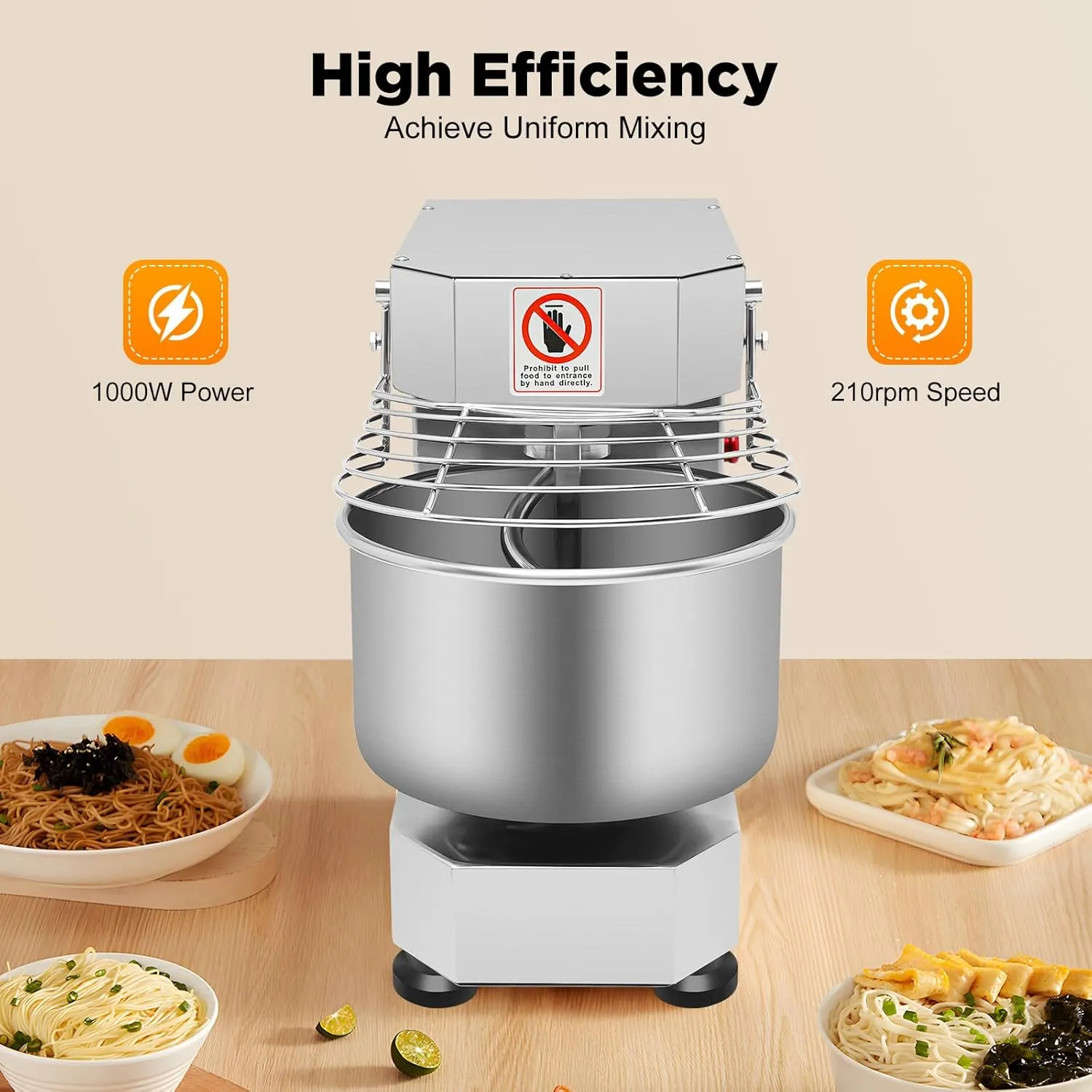
From simple planetary mixers for small batches to high-speed continuous mixers for large-scale production, this equipment ensures homogeneous blending of ingredients like chocolate, nougat, fondant, and caramel.
2. Forming and Shaping Equipment
Once the confectionery mass is prepared, it must be shaped into its final form.
2.1 Depositors and Molding Machines
These precision machines deposit liquid or semi-liquid mixtures like chocolate, jelly, or cream into molds. They are essential for producing uniform items like filled chocolates, gummies, and hard candies.
2.2 Extruders and Rope Sizers
For products like licorice, chewy candies, or toffee, extruders push the mixture through a die to create specific shapes, while rope sizers ensure a consistent diameter before cutting.
3. Chocolate-Specific Machinery
Chocolate processing requires a dedicated set of equipment due to its unique properties.
3.1 Tempering Machines
Tempering is critical for giving chocolate its shine, snap, and stability. Tempering machines melt and then carefully cool chocolate under agitation to form stable cocoa butter crystals.
3.2 Enrobers
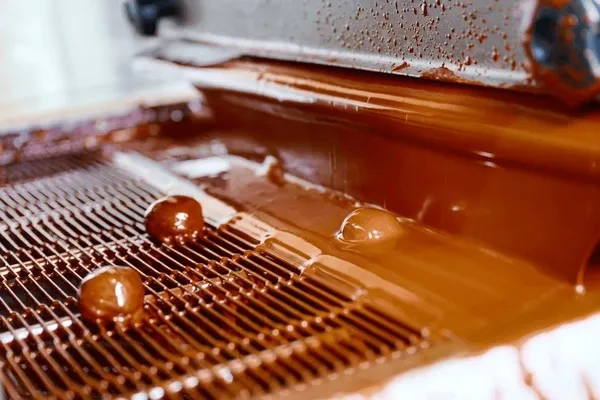
These machines coat centers (like nuts, biscuits, or caramel) with a curtain of tempered chocolate. They consist of a continuous belt that passes items through a chocolate waterfall and a cooling tunnel.
| Equipment | Primary Function | Typical Capacity Range |
|---|---|---|
| Tempering Machine | Crystallizes chocolate for perfect finish | 50 kg - 1000 kg/hr |
| Enrobing Line | Coats centers with chocolate | 100 - 2000 kg/hr |
| Molding Plant | Forms solid or filled chocolate bars | 200 - 5000 pieces/hr |
4. Cooling and Drying Systems
Proper solidification is key to product integrity and shelf life.
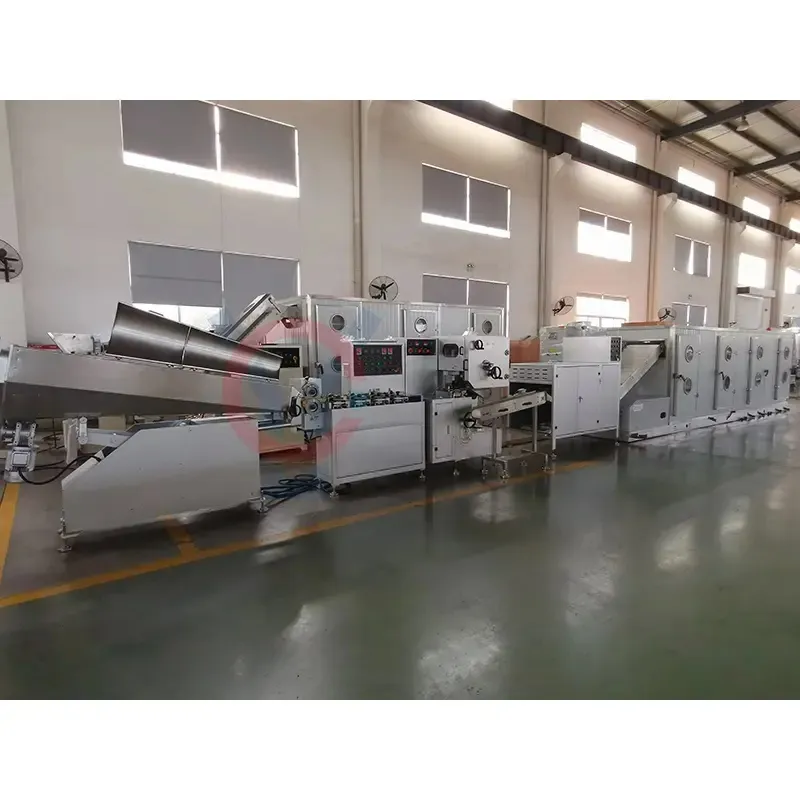
Cooling tunnels use controlled, chilled air to set chocolate, harden candy shells, or cool boiled sweets. For products like marshmallows or certain jellies, drying chambers remove excess moisture to achieve the desired texture.
5. Cutting and Wrapping Machinery
5.1 Cutting Machines
Guillotine cutters, rotary cutters, or ultrasonic cutters are used to slice candy ropes, sheets of toffee, or nougat into precise individual pieces.
5.2 Packaging Equipment
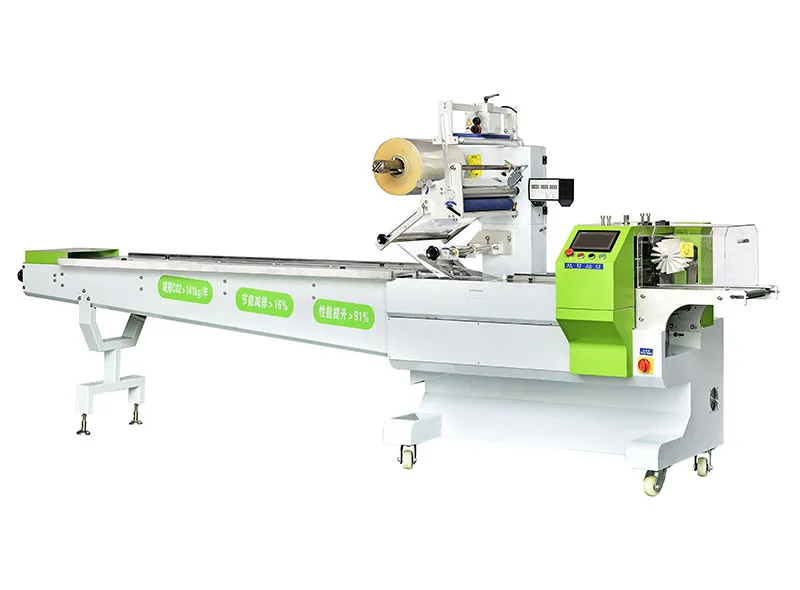
This includes flow wrappers for individual candies, twist wrappers, bagging machines, and box cartoners. Modern lines often integrate checkweighers and metal detectors for quality control.
| Stage | Equipment | Output Goal |
|---|---|---|
| 1. Ingredient Prep | Mixers, Cookers, Melters | Homogeneous cooked mass |
| 2. Forming | Depositors, Extruders, Molds | Shaped, uncooled product |
| 3. Solidification | Cooling Tunnels, Drying Chambers | Set, stable product |
| 4. Finishing | Cutters, Enrobers, Polishers | Final piece formation |
| 5. Packaging | Wrappers, Baggers, Cartoners | Retail-ready package |
6. Ancillary and Support Equipment
A complete confectionery equipment list also includes support systems: refrigeration plants, compressed air systems, water chillers, material handling conveyors, and sophisticated process control software to monitor and coordinate the entire line.
Investing in the right machinery, from the core cooker to the final wrapper, determines product quality, production efficiency, and scalability. Understanding this comprehensive equipment list is the first step in building a successful and sustainable confectionery manufacturing operation.