



Food sterilization is a critical process in modern food science and industry, aimed at eliminating or destroying all forms of microbial life, including bacteria, viruses, fungi, and spores, from food products and packaging. The primary goals are to ensure food safety, prevent foodborne illnesses, and significantly extend shelf life. As global food supply chains expand and consumer demand for safe, convenient, and long-lasting products grows, the role of effective sterilization techniques becomes increasingly vital. This article explores the most prominent food sterilization methods, detailing their mechanisms, applications, advantages, and limitations.
Thermal Sterilization Methods
Thermal methods are the most traditional and widely used forms of food sterilization, relying on heat to inactivate microorganisms.
1. Canning (Retort Processing)
Canning involves placing food in sealed containers (cans, jars, pouches) and subjecting them to high temperatures under pressure in a retort. This process destroys Clostridium botulinum spores, which are the most heat-resistant pathogens of public health concern in low-acid foods.
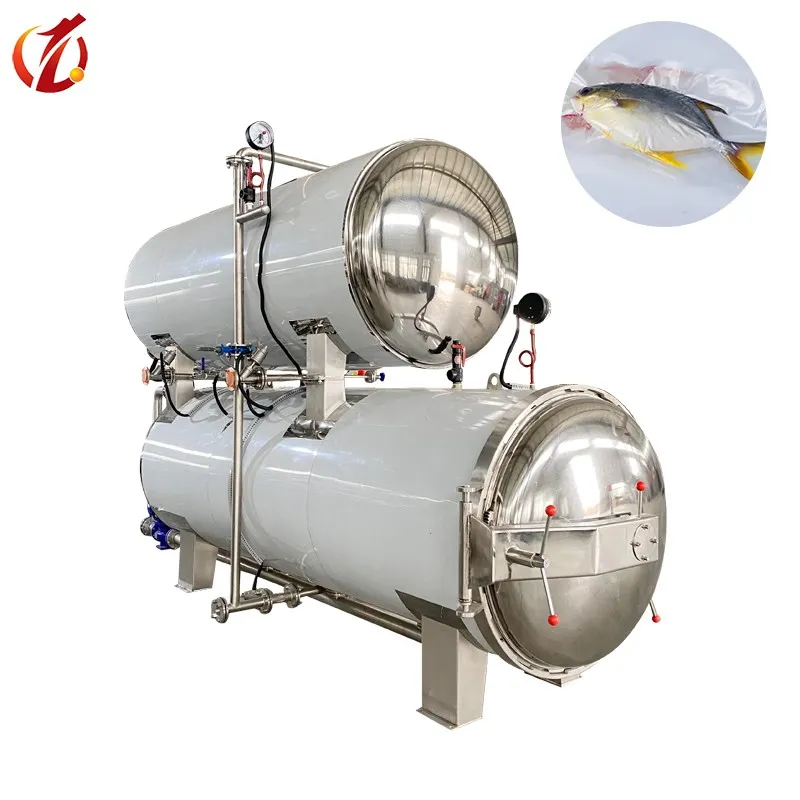
Industrial retort machines used for thermal sterilization of canned foods.
Applications: Vegetables, meats, soups, ready-to-eat meals, seafood.
Key Advantage: Provides ambient-temperature shelf stability for years.
2. Pasteurization
While not a full sterilization method (it does not destroy all spores), pasteurization uses mild heat (typically 60–85°C) to reduce pathogenic and spoilage microorganisms to a safe level. High-Temperature Short-Time (HTST) and Ultra-High Temperature (UHT) processing are advanced forms.
Applications: Milk, juices, beer, liquid eggs.
Key Advantage: Minimally affects sensory and nutritional qualities compared to full sterilization.
Non-Thermal Sterilization Methods
To meet the demand for fresh-tasting, minimally processed foods with high nutritional value, non-thermal technologies have been developed.
1. High-Pressure Processing (HPP)
HPP, also known as pascalization, subjects packaged food to extremely high isostatic pressure (300–600 MPa). The pressure inactivates microorganisms by damaging their cell membranes and denaturing proteins, without significant heat.
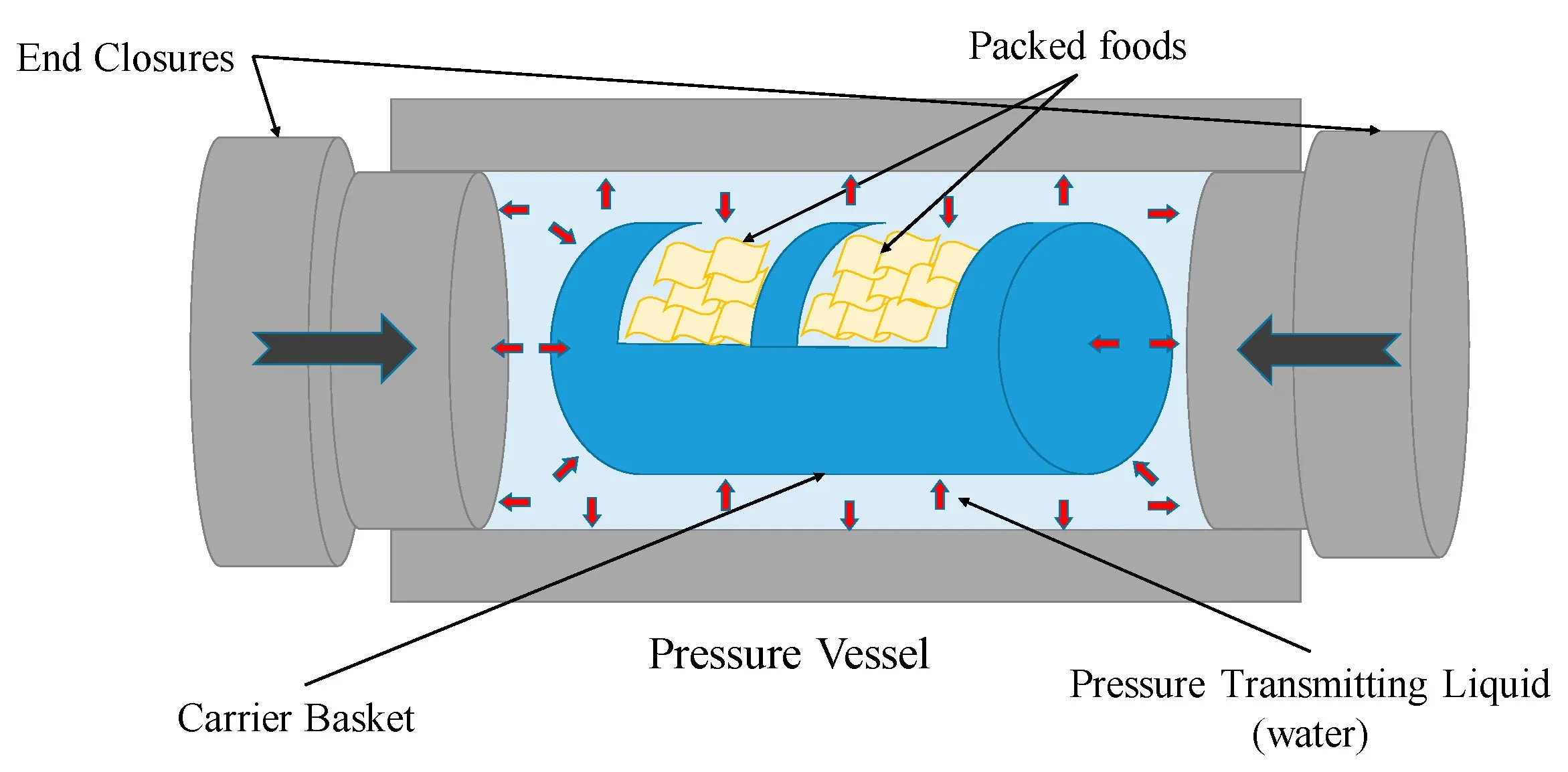
Schematic of High-Pressure Processing (HPP) equipment.
Applications: Ready-to-eat meats, guacamole, cold-pressed juices, seafood, dips.
Key Advantage: Excellent retention of fresh flavor, color, and nutrients.
2. Irradiation (Cold Pasteurization)
Food irradiation exposes products to controlled doses of ionizing radiation (gamma rays, X-rays, or electron beams). The radiation disrupts the DNA of microorganisms, preventing them from reproducing.
Applications: Spices and dried vegetables, poultry, fruits (for insect disinfestation), ground beef.
Key Advantage: Effective for products that cannot withstand heat; can treat food through packaging.
3. Pulsed Electric Field (PEF) Processing
PEF applies short bursts of high-voltage electricity to food placed between two electrodes. The electric field causes electroporation, forming pores in microbial cell membranes and leading to cell death.
Applications: Fruit juices, milk, yogurt, liquid egg products.
Key Advantage: Very low thermal load, preserving sensory attributes.
Chemical and Gas Sterilization Methods
These methods use antimicrobial agents to achieve sterilization, often for surfaces, packaging, or specific food types.
1. Ethylene Oxide (EtO) and Hydrogen Peroxide Gas
Primarily used for sterilizing food packaging materials and spices. These gases are alkylating agents that disrupt microbial DNA. Their use on food itself is strictly regulated due to residue concerns.
Applications: Plastic containers, spices, dried herbs.
Key Advantage: Effective at low temperatures for heat-sensitive materials.
2. Ozone Treatment
Ozone (O₃) is a powerful oxidizing agent that can be dissolved in water or used as a gas. It effectively destroys bacteria, viruses, and molds on food surfaces and in wash water.
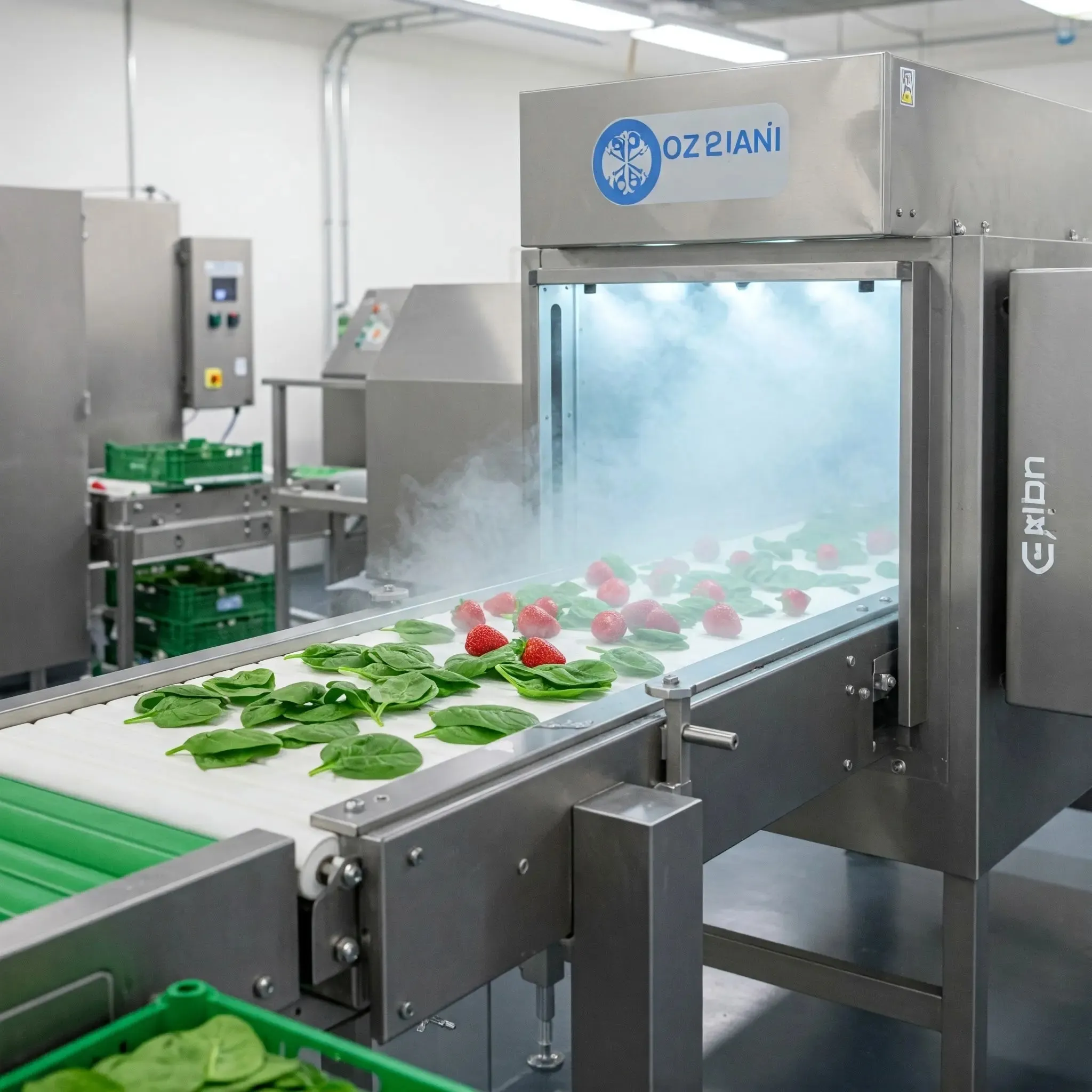
Ozone treatment for surface decontamination of produce.
Applications: Fresh produce wash, meat processing, sanitation of processing equipment.
Key Advantage: Leaves no harmful residues; decomposes to oxygen.
Comparison of Major Food Sterilization Methods
The following table provides a concise comparison of the core methods discussed, highlighting their primary characteristics.
| Method | Primary Mechanism | Typical Applications | Key Advantages | Key Limitations |
|---|---|---|---|---|
| Canning (Retort) | Moist heat under pressure | Low-acid canned foods (meats, vegetables) | Long ambient shelf life; destroys all pathogens | High heat can degrade texture, color, nutrients |
| High-Pressure Processing (HPP) | Extreme isostatic pressure | Ready-to-eat meats, juices, guacamole | Superior fresh quality; no thermal damage | High capital cost; batch process; not effective on low-moisture foods |
| Irradiation | Ionizing radiation (Gamma/X-ray/e-beam) | Spices, poultry, ground beef, fruits | Deep penetration; effective for disinfestation | Consumer acceptance; can cause off-flavors in fats |
| Pulsed Electric Field (PEF) | High-voltage electric pulses | Liquid foods (juice, milk) | Minimal heat generation; energy-efficient | Limited to pumpable foods; less effective on spores |
| Ozone Treatment | Oxidation | Produce wash, surface sanitation | No residues; effective disinfectant | Surface treatment only; gas can be corrosive |
Conclusion: Choosing the Right Method
The selection of an appropriate food sterilization method depends on a matrix of factors: the type of food (pH, water activity, composition), the target microorganisms, the desired shelf life, nutritional and sensory quality targets, packaging requirements, and economic feasibility. The trend in food processing is moving towards intelligent "hurdle technology," where multiple mild methods (e.g., HPP plus mild heat or natural antimicrobials) are combined to achieve safety and quality synergistically. As technology advances, methods like cold plasma and advanced oxidation processes are emerging, promising even greater efficiency and minimal impact on food. Ultimately, effective sterilization remains the cornerstone of a safe, stable, and sustainable global food supply.