



Whether you're opening a specialty coffee shop, a craft cocktail bar, or simply elevating your home beverage station, a well-planned beverage equipment list is the foundation of success. The right tools not only ensure efficiency and consistency but also enhance the quality and presentation of every drink served. This comprehensive guide breaks down the essential equipment across categories, complete with key specifications and considerations to help you make informed purchasing decisions.
1. Core Coffee and Espresso Equipment
For any operation serving coffee, investing in high-quality core machinery is non-negotiable. These items form the heart of your beverage program.
Espresso Machine
The centerpiece of any coffee bar. Commercial machines feature multiple group heads, steam wands, and advanced temperature stability. Key considerations include boiler type (single, dual, or multi), recovery time, and programmability.
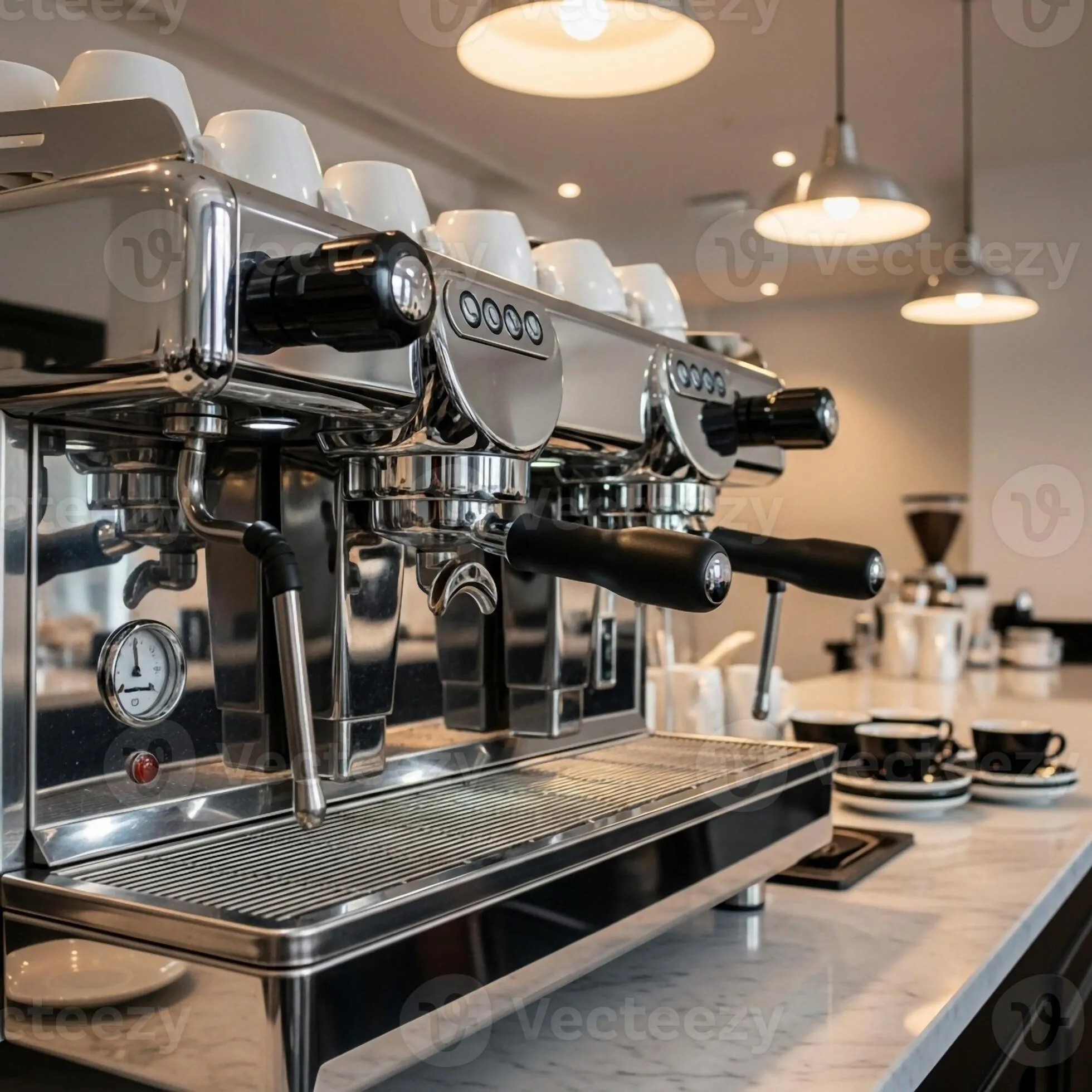
A professional multi-group espresso machine on a coffee shop counter.
Commercial Coffee Grinder
Precision grinding is critical for flavor extraction. Burr grinders are essential, offering adjustable settings for espresso, filter, and cold brew. Look for grinders with low retention and durable burrs.
Brewing Stations for Filter Coffee
For batch brewing, a high-quality automatic brewer with thermal carafes or airpots maintains optimal serving temperature. For manual methods, equipment like pour-over stations with gooseneck kettles and scales are vital.
| Equipment | Key Features | Commercial Consideration |
|---|---|---|
| Espresso Machine (2 Group) | Dual boiler, programmable volumetric shots, 4 steam wands | Peak output: ~120 drinks/hour; Requires 220V power & water line |
| Espresso Grinder | Flat burrs, digital timer, low retention chamber | Burr replacement schedule: every 800-1200 lbs of coffee |
| Batch Brewer | Thermal carafe system, programmable bloom cycle, 12-cartridge water filter | Brew capacity: 8-12 liters/hour; Easy descaling access |
| Pour-Over Station | Gooseneck kettle (1.2L), digital scale (0.1g precision), V60 holders | Staff training required for consistency; Ideal for specialty offerings |
2. Bar and Cocktail Equipment Essentials
A functional bar requires specialized tools for mixing, chilling, and serving alcoholic and non-alcoholic beverages with precision and flair.
Shaking, Stirring, and Mixing Tools
This includes Boston shakers, mixing glasses, bar spoons, jiggers (measuring tools), and Hawthorne strainers. Durability and standardization are key for speed and consistency during service.
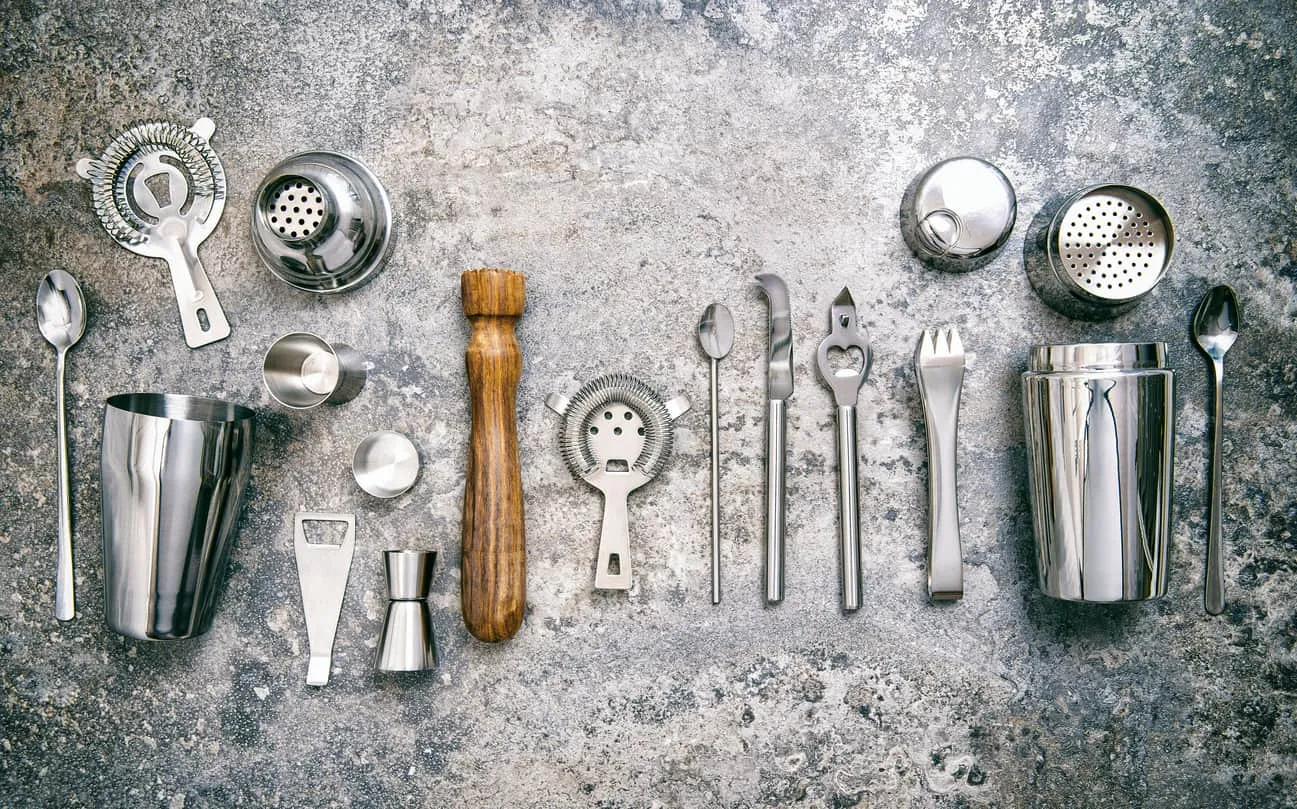
A collection of professional bar tools including shakers, jiggers, and strainers.
Ice Machine and Storage
Often overlooked, ice is a key ingredient. A commercial ice machine producing clear, hard cubes or nuggets is essential, paired with insulated ice bins or wells to prevent melting.
Blenders and Juicers
High-performance blenders are necessary for frozen cocktails and smoothies. Slow masticating juicers are ideal for fresh fruit and vegetable juices, preserving nutrients and flavor.
| Category | Specific Items | Material/Standard |
|---|---|---|
| Measuring & Mixing | Jigger (1oz/0.5oz & 25ml/50ml), Bar Spoon, Mixing Glass, Boston Shaker Set | Stainless Steel, Japanese-style jiggers preferred |
| Ice Equipment | Undercounter Ice Machine (500 lb/day capacity), Ice Bins, Ice Tongs & Scoops | Air-cooled condenser; NSF-certified |
| Appliances | Commercial Blender (1500W+), Cold-Press Juicer, Glass Chiller/Freezer | Variable speed control; BPA-free containers |
| Garnishing | Zester, Channel Knife, Cutting Board, Paring Knife, Muddler | Food-safe, durable handles; Sharp, rust-resistant blades |
3. Dispensing, Storage, and Service Ware
This category encompasses the infrastructure for storing ingredients and the final presentation of beverages to the customer.
Refrigeration and Cold Storage
Undercounter refrigerators for dairy, juice, and wine; display refrigerators for bottled drinks; and a dedicated wine cooler are fundamental for maintaining product quality.
Draft System and Dispensers
For beer, kombucha, or cold brew coffee on tap, a draft system with kegs, CO2 tanks, regulators, lines, and faucets is required. Post-mix dispensers for sodas are also common in many bars.
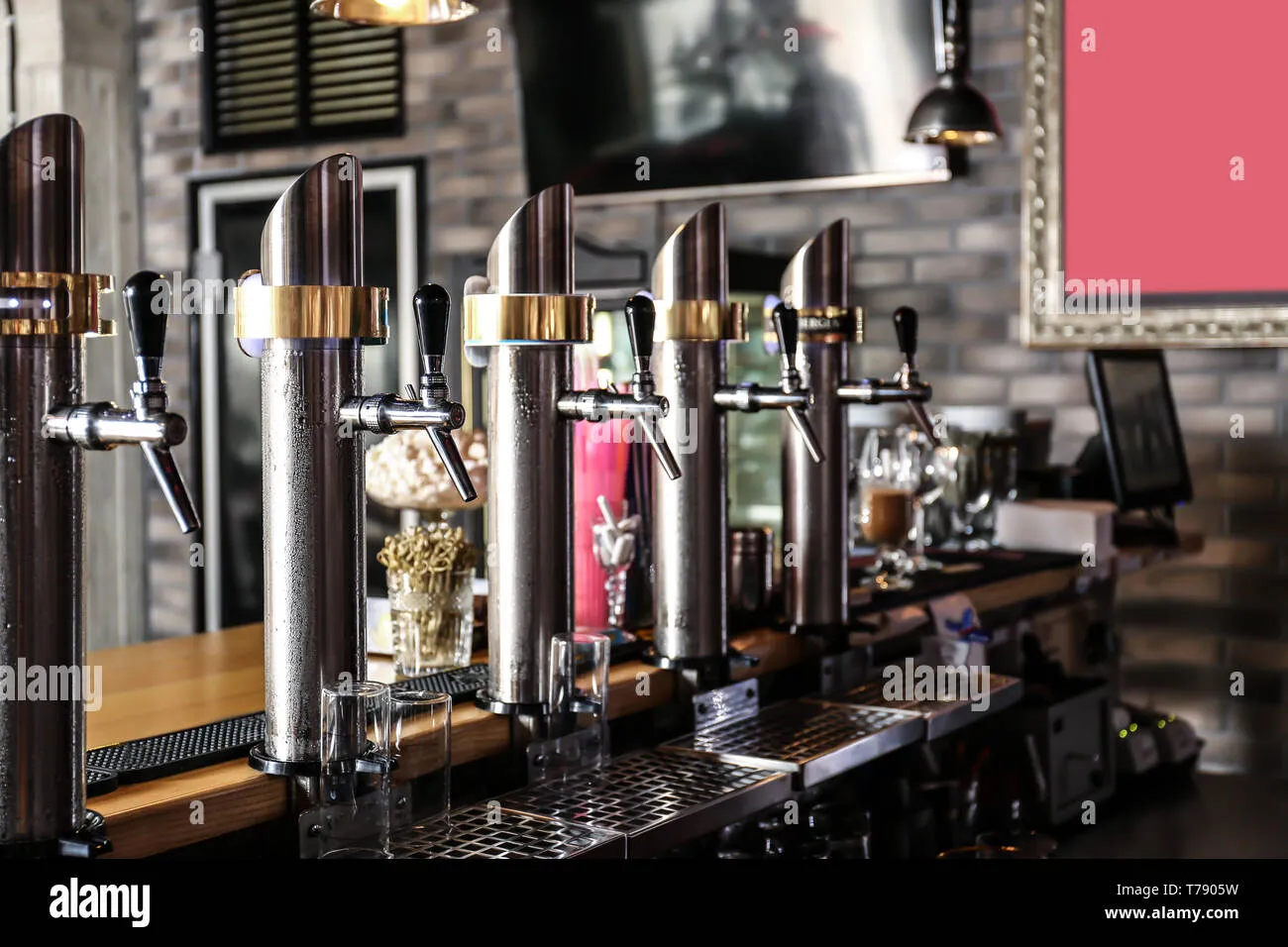
A sleek draft beer system with multiple taps at a modern bar.
Glassware and Serveware
A curated selection of glassware (rocks, highball, coupe, wine, beer pints) is crucial. Also include decanters, carafes, pitchers, and durable ceramic or to-go cups for coffee.
4. Ancillary and Support Equipment
These items support operations, maintenance, and cleanliness, ensuring a smooth-running and compliant beverage service.
Cleaning and Maintenance
This includes glasswashers, three-compartment sinks, bar mats, cleaning brushes for equipment (espresso machine backflush, keg lines), and chemical cleaners (sanitizer, decalcifier).
Smallwares and Consumables
Stirrers, straws, napkins, coasters, drip trays, bottle openers, corkscrews, and speed rails for organizing liquor bottles fall into this category.
Summary: Building Your List
Creating your beverage equipment list requires balancing budget, space, menu complexity, and expected volume. Start with the non-negotiable core items for your primary offerings (e.g., espresso machine for a cafe). Then, layer in the supporting equipment for preparation and service. Always factor in the cost of installation, maintenance, and spare parts. A well-researched list is an investment that pays dividends in drink quality, operational efficiency, and customer satisfaction for years to come.